Global Expansion: Why Your International Sales Are Stalling
When a Shopify or Next.js brand scales from a single market to a global presence (e.g., expanding from the US to the EU and Australia), they often face a sudden, mysterious drop in organic traffic.
The culprit? Technical Debt and SEO Cannibalization.
If your US store is ranking in the UK, or your German customers are seeing USD prices, you aren't just losing sales—you are damaging your brand's authority. Here is how to audit and fix these high-level technical issues.
1. The Hreflang Conflict (The #1 SEO Failure)
Hreflang tags tell Google which language and country version of a page to show to a specific user.
The Problem:
Most Shopify stores rely on apps to handle translations. These apps often inject hreflang tags via JavaScript after the page loads. Google’s crawlers sometimes miss these, leading to "Duplicate Content" penalties.
The Next.js / Headless Fix:
In a Next.js environment, you must implement Server-Side Hreflang Injection.
- Action: Use your
next-sitemapor customgetStaticPropsto generate hard-codedrel="alternate"tags in the HTML<head>. - Validation: Use a tool like Screaming Frog to ensure your US and UK versions are cross-referencing each other correctly.
2. API Latency in Headless Architectures
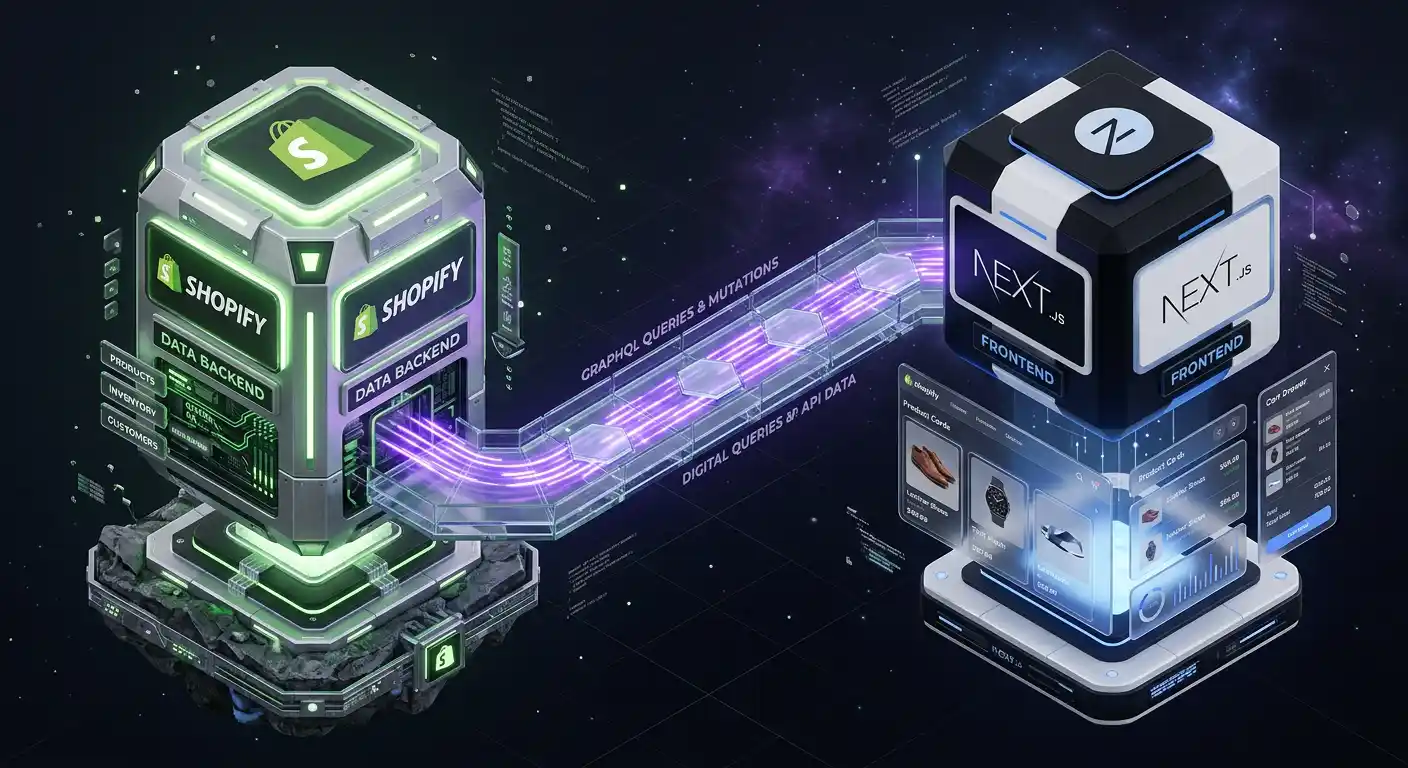
If you are running a Next.js (Headless) store on Shopify, your middleware often has to fetch product data from Shopify’s Admin API.
The Problem:
If your server is in North America (AWS us-east-1) but your customer is in London, every "Add to Cart" or "Price Change" request has to travel across the Atlantic. This creates a "ghosting" effect where the site feels slow despite having a high PageSpeed score.
The Fix: Edge Functions & Stale-While-Revalidate (SWR)
- Deployment: Deploy your Next.js frontend on Vercel or Netlify using Edge Middleware.
- Strategy: Use Incremental Static Regeneration (ISR). This pre-renders localized pages at the "Edge" (closest to the user).
- Result: A user in London gets a 50ms response time instead of 600ms.
3. The "Force Redirect" Disaster
Many Shopify owners use "Automatic Redirects" based on IP addresses.
The Problem:
Googlebot usually crawls from the US. If you force-redirect all US visitors (including Googlebot) to your .com store, it may never crawl your .co.uk or .ca versions. This makes your international stores invisible to search engines.
The Fix: The "Soft Suggestion" UI
Stop using forced redirects. Instead:
- Detect the user's location via IP.
- Show a non-intrusive modal or banner: "It looks like you are in the UK. Would you like to shop on our UK store for faster shipping?"
- Ensure your
robots.txtallows access to all regional subfolders.
4. Localized Content Cannibalization
If your US/products/blue-denim and UK/products/blue-denim are 100% identical in text, Google will pick one as the "Original" and hide the other.
The Fix: Contextual Localization
Beyond changing $ to £, you must localize the "Technical Debt" in your copy:
- Terminology: "Sweaters" (US) vs "Jumpers" (UK).
- Social Proof: Show UK-specific reviews on the UK store.
- Metadata: Ensure your Meta Titles include regional keywords (e.g., "Free UK Delivery").
Technical Audit Checklist for Brand Owners
| Issue | Shopify (Native) Solution | Next.js (Headless) Solution |
|---|---|---|
| Currency | Use Shopify Markets / Markets Pro | Use Middleware to detect Geolocation |
| Speed | Minimize high-latency Shopify Apps | Implement ISR and Edge Caching |
| SEO Tags | Edit theme.liquid for static tags | Use next-seo for dynamic injection |
| Inventory | Sync via Shopify Global Inventory | Aggregate multiple Shopify Storefront APIs |
Conclusion: Engineering for Scale
International success isn't just about translation; it’s about Infrastructure. Whether you are on a standard Shopify setup or a complex Next.js Headless build, your technical foundation must be invisible to the user but crystal clear to the search engine.
Are your international rankings dropping?
I specialize in auditing Shopify Plus and Next.js architectures to ensure global compliance and high-velocity performance.